Carry On Together Equipment Guide
Inflatable mats, trampolines, the pallet jack, hardware stores, and Warehouse training after Demo 1.7 removed the time bonus.
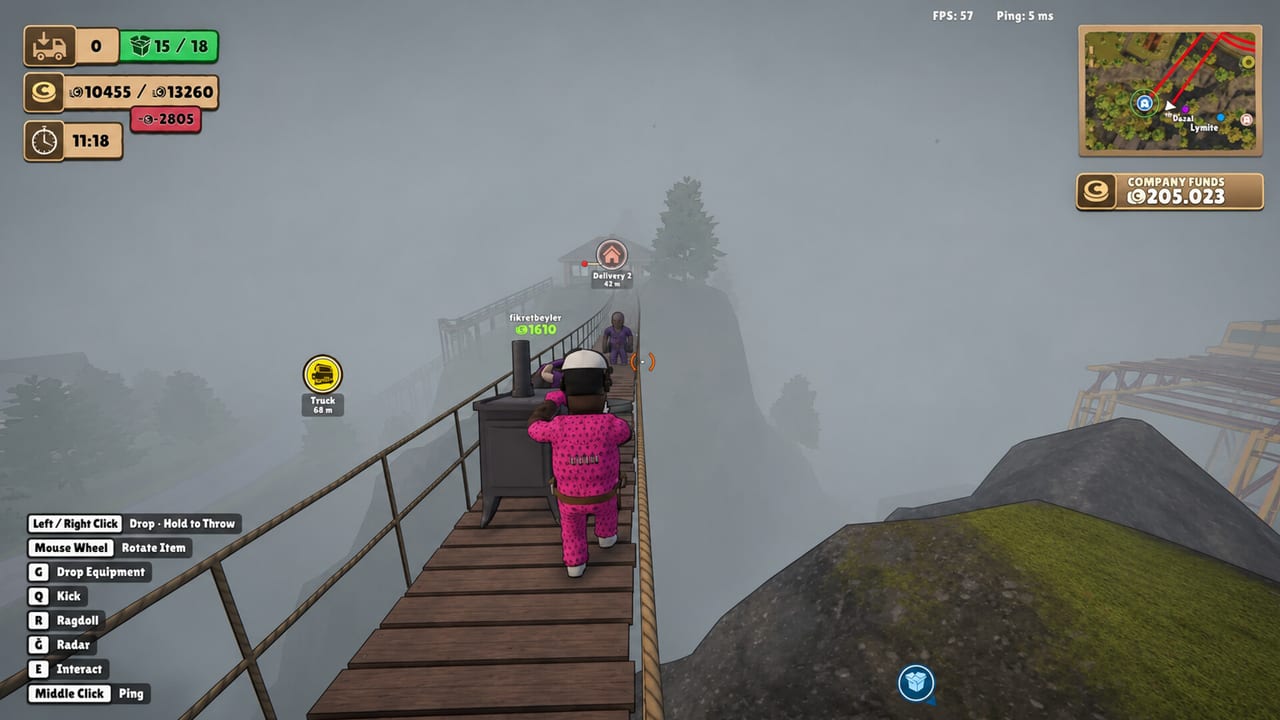
Demo 1.7 (18 October 2026) turned gear from a nice-to-have into a core part of how you protect tips in Carry On Together. The free demo (Steam app 5338620) now sells equipment from hardware stores in the Warehouse and in town, adds a lower-floor training area for boxes, gear, the pallet jack, throwing, and jumping, and ships new props such as inflatable mats, trampolines, explosive gas canisters, and breakable toilets. This page is the dedicated equipment walkthrough; pair it with How to Carry Together for shared lifts and the Demo Guide for the full 1.7 feature list.
If you are still learning the company loop, start with Getting Started. For keybinds and HUD tools, keep Controls open. Patch history for the demo lives on Demo Updates.
Why gear matters after the time bonus vanished
Older tip videos still push sprint clears. That advice aged badly. Demo 1.7 removed the time bonus, so a finish that is five seconds faster and one shattered toilet poorer is a net loss. Homeowners watch every wall hit, broken part, and thrown box. Personalities such as Picky Auntie and Easygoing Uncle punish chaos and reward careful placement.
Equipment is how you replace raw panic with planned physics:
- Soft landings instead of hard floors
- Controlled vertical movement instead of desperate yeets
- Wheeled loads instead of four people wrestling a compatible stack through a doorway
- Pre-bought tools instead of mid-job improvisation when the sofa will not clear the stair turn
Damage still cuts pay and can add contract penalties. Break a toilet in a client’s house and the repair bill is on your company. Treat gear as insurance for the tip, not as carnival toys — unless you are deliberately testing physics downstairs in the Warehouse.
Warehouse training area first
Before you spend company cash, spend ten minutes on the lower floor of the Warehouse. Official Demo 1.7 notes call out practice with boxes, equipment, the pallet jack, throwing, and jumping. That floor exists so your first paid contract is not the first time someone meets a trampoline at speed.
Suggested warm-up:
- Carry a light box through a doorway with the grip style you will use on jobs (Controls).
- Place an inflatable mat and lower an item onto it on purpose.
- Bounce once on a trampoline so everyone feels the height and landing.
- Drive the pallet jack through a tight turn and a straight run.
- Throw a box into open space, then agree as a crew that client houses are not the place to repeat the gag.
Solo players should still run this loop. Online co-op for up to four players (Multiplayer) just means more people who need the same muscle memory before someone invents a fridge cannon.
Inflatable mats
Inflatable mats are the boring hero of Demo 1.7 equipment. Place them where a controlled drop, awkward lower, or stair-to-landing transfer would otherwise slap furniture into hard flooring. They will not fix a desynced two-person lift, but they forgive small height mistakes that used to farm homeowner rage.
Practical habits:
- Stage a mat at the base of tight stairs before the heavy piece leaves the upper floor.
- Use one near the truck bay when unloading fragile items that tend to tip at the tailgate.
- Do not leave mats as trip hazards in the only doorway your carriers still need.
- Buy early if your company keeps scuffing floors on otherwise clean contracts.
Mats reward patience. After the time bonus removal, spending thirty seconds to pad a landing is usually worth more than sprinting the next box.
Trampolines
Trampolines are the flashy cousin. Demo 1.7 lists them alongside mats as new equipment, and the training floor expects you to practice jumping with them. In a client house they can solve awkward height gaps — or turn a favorite lamp into shrapnel if the crew has never rehearsed the landing.
Rules of thumb:
- Learn bounce height and recovery in the Warehouse before inventing a stunt on a live job.
- Spot the landing. One player on the trampoline, one clearing the floor and calling “set.”
- Never trampoline a gas canister “for science” outside the training area.
- If homeowners are already angry, pick mats and careful grips over bounce comedy.
Creative traversals are part of the fantasy pitch of this physics co-op mover. The difference between a viral clip and a repair bill is whether the trampoline was planned.
Pallet jack
The pallet jack is the wheeled answer to loads that punish raw arm carries. Demo 1.7 explicitly calls it out in the training area notes, so treat turning circle and fork alignment as skills, not instincts.
Use it when:
- The load is compatible and the path is mostly flat
- Doorways are wide enough for the jack plus a spotter
- Your crew keeps losing sync on long hallway pushes
Practice slow approaches. A jack that clips a door frame mid-turn can dump cargo as hard as a bad hand-off. Assign one dedicated operator when possible; everyone else clears doors, elevators, and people. For how the jack fits into shared lifts and path calling, cross-read How to Carry Together.
After the house segment, the road still matters — careful packing tips live in Driving Tips. Gear that saved you indoors will not save an unsecured stack on the first roundabout.
Gas canisters and breakable toilets
Demo 1.7’s “new equipment and surprises” line is not only shop inventory. Gas canisters can explode. Toilets can break. Break one in a client’s house and you pay the repair bill. These props change how you scan rooms before you start yeeting boxes past watching owners.
Crew protocol:
- Ping hazardous props with middle mouse when you spot them (Controls).
- Move canisters deliberately or leave them alone; do not use them as bumper cars.
- Treat toilets as fragile job pieces, not comedy props, once a homeowner is present.
- If you want chaos testing, keep it on the Warehouse training floor.
Intact cargo and calmer clients beat a highlight reel that empties the tip pool.
Hardware stores: Warehouse and town
Hardware stores selling equipment appear in the Warehouse and in town. Buy what your budget allows after early jobs — you do not need every gadget on contract one — but know the shops exist so you are not stuck improvising mid-move.
Shopping habits that keep the company solvent:
- Finish the Warehouse training warm-up before your first purchase.
- Prioritize mats if your last jobs were floor-scuff disasters.
- Add the pallet jack when hallway fights keep burning time and tips.
- Grab trampolines only after the crew can land them without freelancing.
- Restock between jobs rather than sprinting to town mid-contract unless the job sheet (J) and map (M) make a quick stop clearly worth it.
The Warehouse also gained a gazebo and new truck decorations in the same update. Nice-to-haves aside, the stores are the real economic unlock: gear is a reinvestment loop alongside truck upgrades from Getting Started.
Buy before the hard jobs
A useful company rhythm:
- Loan, truck, first easy contracts.
- Training floor reps with mats, trampoline, and pallet jack.
- Hardware store run for the tools your failures already identified.
- Harder homeowner jobs with roles assigned for who carries gear.
Buying after a disaster is fine. Buying before the next disaster is better. Because Demo 1.7 removed the time bonus, the minutes you spend shopping and staging rarely cost as much as another angry chase from a homeowner you just showered in porcelain.
Confirm your PC can keep physics stable before a four-player gear night — System Requirements — and match lobby builds after patches on Demo Updates.
Crew roles: who carries the gear
Equipment only helps if someone owns it mid-job. Suggested splits for 2–4 players:
| Role | Focus |
|---|---|
| Lead carrier | Path, grip calls, favorite-item caution |
| Rear carrier / spotter | Trailing edges, door frames, middle-mouse pings |
| Gear runner | Mats and trampolines placed before lifts start |
| Jack operator | Pallet jack pathing; asks for clear lanes |
| Driver (later) | Stays out of the house circus until load-out |
On a duo, one player is usually gear runner between lifts while the other stages the next piece. On a full squad, specialize so four people are not fighting over the same mat. Public lobbies show estimated ping; prefer Steam friends when you want fewer random drop-outs mid-sofa (Multiplayer).
Call gear the same way you call lifts: “mat down,” “jack ready,” “no trampoline,” “canister left alone.” Silence is how toilets die.
Related reading
- How to Carry Together — sync grips, stairs, elevators, and when mats or the jack beat brute force
- Demo Guide — Demo 1.7 homeowners, training floor, stores, and demo versus full game scope
- Controls — job sheet, radar, map, ping, grips, and tailgate E
- Getting Started — loan, truck, first hour, and training loop
- Driving Tips — packing and road habits after gear saved the house segment
- Multiplayer — crew size, roles, lobbies, and voice habits
- Demo Updates — patch timeline for equipment and connection fixes
Master the shop and the training floor, and Demo 1.7’s equipment stops being a surprise prop list and starts being how your company stays solvent.
Also read the Homeowners Guide and Regions Guide for tips and full-game destinations.
Frequently Asked Questions
Quick answers for movers, drivers, and co-op crews.
When did equipment and hardware stores arrive?
Demo 1.7 on 18 October 2026 added inflatable mats, trampolines, gas canisters, breakable toilets, the pallet jack training focus, and hardware stores in the Warehouse and in town.
Where should I practice gear before paid jobs?
Use the training area on the lower floor of the Warehouse for boxes, equipment, the pallet jack, throwing, and jumping before you spend company cash on a live contract.
Do I still need to rush if I bought good equipment?
No. Demo 1.7 removed the time bonus. Intact cargo, calmer homeowners, and fewer repair bills matter more than a slightly faster clear.
What happens if I break a toilet in a client's house?
The repair bill is charged to your company. Scan rooms for breakable toilets and explosive gas canisters before you start throwing boxes.
Who on the crew should carry mats and run the pallet jack?
Assign a gear runner for mats and trampolines and a dedicated jack operator when you have three or four players. On a duo, rotate gear placement between lifts so staging stays ahead of the next heavy piece.