Carry On Together Driving Tips for Moving Jobs
Pack the bed, pick a calm driver, survive the road, and unload without undoing a perfect house carry.
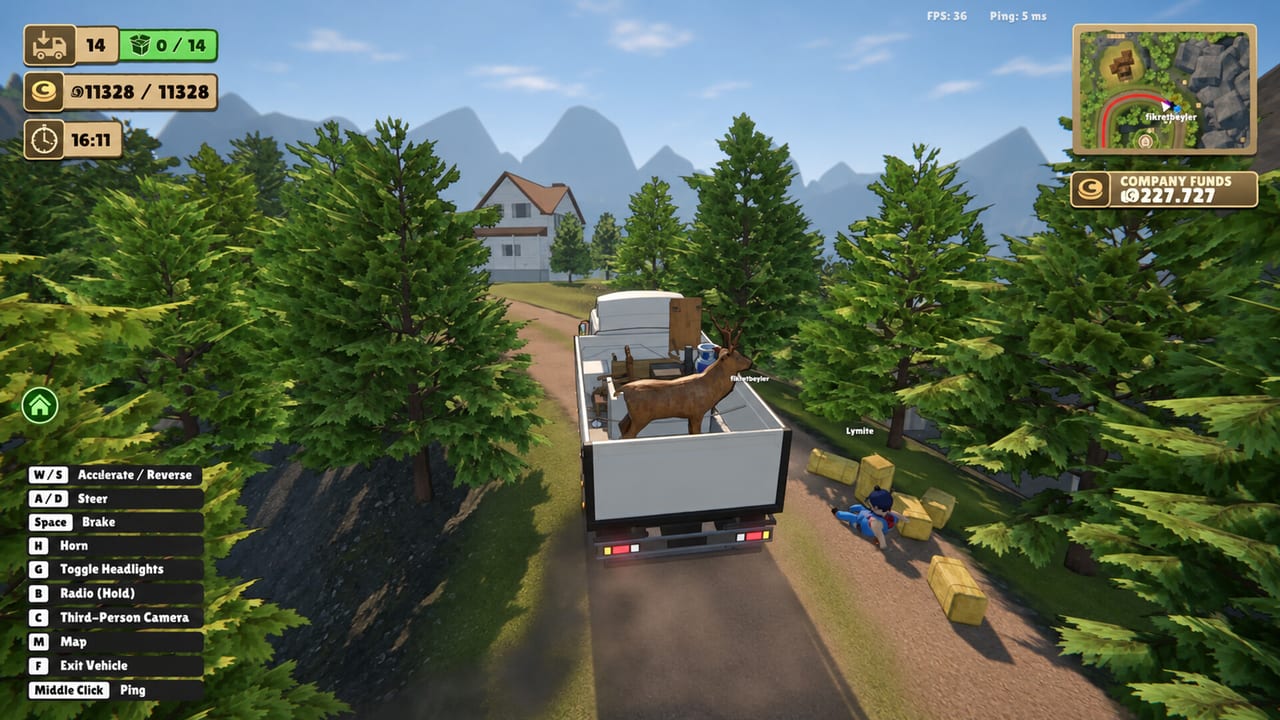
In Carry On Together, moving the furniture is only half the job. The store pitch is blunt: load the delivery truck, pick a driver, hit the road, and stay alert — one sharp turn and the whole cargo flies. The road might be the most dangerous part of the contract, especially when the person behind the wheel is also the person who thought the staircase fridge yeet was “basically fine.”
This page covers loading, on-road habits, hazards, crew trust, and unloading. Pair it with How to Carry Together for the house segment and Getting Started if you still need the company loop. Demo scope and 1.7 changes live in the Demo Guide.
Why driving decides the payout
You can clear a house with surgical patience and still bankrupt the tip on the first roundabout. Cargo uses the same physics toys as furniture: unsecured boxes become projectiles, tall stacks become levers, and a flipped truck turns a delivery into a roadside recovery mission.
Damage on the road counts like damage in the hallway. Homeowners may not be sitting in the cab with you, but the payout screen still sees broken inventory. With the Demo 1.7 time bonus removed, there is even less reason to treat the drive like a rally stage.
Loading cargo like you mean to arrive
Before anyone claims the driver’s seat:
- Finish the house path. Do not partially load while a piano still blocks the stair — crews that split focus drop items at both ends.
- Stage on flat ground beside the truck, then use the tailgate interaction (E by default; hold to force closed when needed — see Controls).
- Pack low and dense. Heavy pieces near the bed floor reduce rollover drama. Light boxes can fill gaps so cargo cannot gather speed inside the bay.
- Avoid decorative Jenga. A towering stack looks productive until the first left turn.
- Ping leftovers. Middle-mouse ping anything still sitting on the curb so the crew does not drive off one wardrobe short.
- Confirm the gate. A tap that leaves the tailgate wrong is a classic way to salt the highway with client property.
If you bought inflatable mats or other gear, decide whether they ride in the cab area or the bay before you roll. Loose equipment becomes another hazard when the truck leans.
Assigning the driver
Ask one question out loud: do you trust this driver? The game itself frames that doubt as part of the joke — and the danger.
Good driver traits for this physics mover:
- Smooth steering instead of twitch correction.
- Willingness to brake before corners, not during them.
- Enough map awareness to use M without swerving into a fence.
- Zero interest in “testing suspension” with a full load.
Passengers should not yank the driver out of the seat mid-route. Earlier demo fixes addressed trucks launching when entering, exiting, or when the driver was pulled through the door, and when the vehicle touched the ground oddly — but grief pulls still waste time and reshuffle cargo. Save the comedy for after the payout screen.
Sharp turns and speed discipline
Treat every corner as a cargo event:
- Brake early, turn once, accelerate late.
- If you feel the bed shift, straighten and settle before the next bend.
- Wide suburban turns are safer than cutting apexes next to fences and gates.
- Oncoming obstacles are not invitations to swerve at full throttle; slow first, then adjust.
Speed only helps if the load survives. A cautious arrival with intact furniture beats a dramatic drift that paints the boulevard with cardboard.
Road hazards and location chaos
Official copy calls out varied routes: suburban houses, multi-story offices, narrow apartments, and — in the wider full game — mountain dirt roads and other disaster venues. In any of those:
- Watch the road surface. Dirt and uneven paths upset tall loads faster than clean town asphalt.
- Respect chokepoints. Gates, tight streets, and cluttered office approaches need the same “path first” mindset you used indoors.
- Clear rocks or blockers when the job fantasy includes rolling obstacles off the route — do it deliberately, not by ramming the truck into them for science.
- Expect passenger chaos. Friends hopping around the bay or cabin can still jostle things; agree that the drive is a quiet phase.
Use radar (X) and the map (M) when you lose the route, but the driver should glance, not rubberneck. A passenger can own map duty and call turns.
Trust, voice, and pings on the road
Co-op driving works when callouts are boring:
- “Left in fifty.”
- “Braking.”
- “Load shifted — slow.”
- Ping the destination bay when you arrive so unloaders converge on the right door.
If ping estimates in the lobby were poor, expect rubber-banding that makes precise driving harder. Prefer Steam friend sessions for serious money runs; save chaotic public lobbies for goof nights when you can afford the repair bills.
Unloading without a second disaster
Arrival is not completion:
- Park on the flattest practical spot near the entrance you actually intend to use.
- Set the tailgate state with E / hold as needed.
- Unload heavy shared pieces with the same sync rules as the origin house — grip, lift, rotate, set.
- Do not toss boxes into the new living room as a celebration. Homeowners at the destination still care, and breakage still taxes pay.
- Place items where the job expects them; unfinished placement can leave money on the table even if nothing shattered.
- Only then joke about the driver’s cornering.
If something broke on the road, be honest at the payout screen and adjust the next load plan. Repeating a tall stack after a turnover is how companies stay tiny forever.
Solo driving notes
Single-player still uses the same truck. You will spend more time on load/unload loops without teammates staging the bay. Pack even more conservatively — there is no passenger to leap out and catch a sliding crate mid-corner (and leaping out mid-corner was a bad idea anyway).
Use the Warehouse and early demo jobs to learn how your steering sensitivity throws cargo. Graphics presets and FOV options from Demo 1.7 can change how well you judge speed and clearance; tweak them before blaming the suspension.
Quick driving checklist
- Tailgate correct; bay packed low; leftovers pinged.
- Calm driver assigned; passengers agree to behave.
- Map route known; no rally racing with client furniture.
- Brake before turns; settle the load after any shift.
- Park smart; unload with team-lift discipline.
- Review damage before taking a bigger contract.
Master the road and your careful How to Carry Together work actually pays out. Fail the road and you are just a very polite team of people who donated a sofa to the asphalt.
Frequently Asked Questions
Quick answers for movers, drivers, and co-op crews.
What is the biggest driving mistake new crews make?
Speeding into sharp turns with a tall, loose load. Brake early, pack low, and treat every corner as a cargo event.
How do I load the truck correctly?
Stage items, use E at the tailgate to slide cargo in, pack heavy pieces low, fill gaps so nothing gathers speed, then hold-close the gate when needed.
Should passengers mess with the driver?
No. Pulling the driver out or goofing mid-route wastes time and can upset cargo even after demo truck physics fixes.
Does careful driving still matter without a time bonus?
Yes. Demo 1.7 removed the time bonus, so surviving the road with intact furniture matters more than a slightly faster arrival.
What should I read with this guide?
How to Carry Together for house lifts, Controls for tailgate and HUD keys, Getting Started for the company loop, and the Demo Guide for current demo features.